Payment Infrastructure Powering Cross-Format Mobile Casino Experiences
Xander Lorenz · Jun 22, 2026

Payment Infrastructure Powering Cross-Format Mobile Casino Experiences
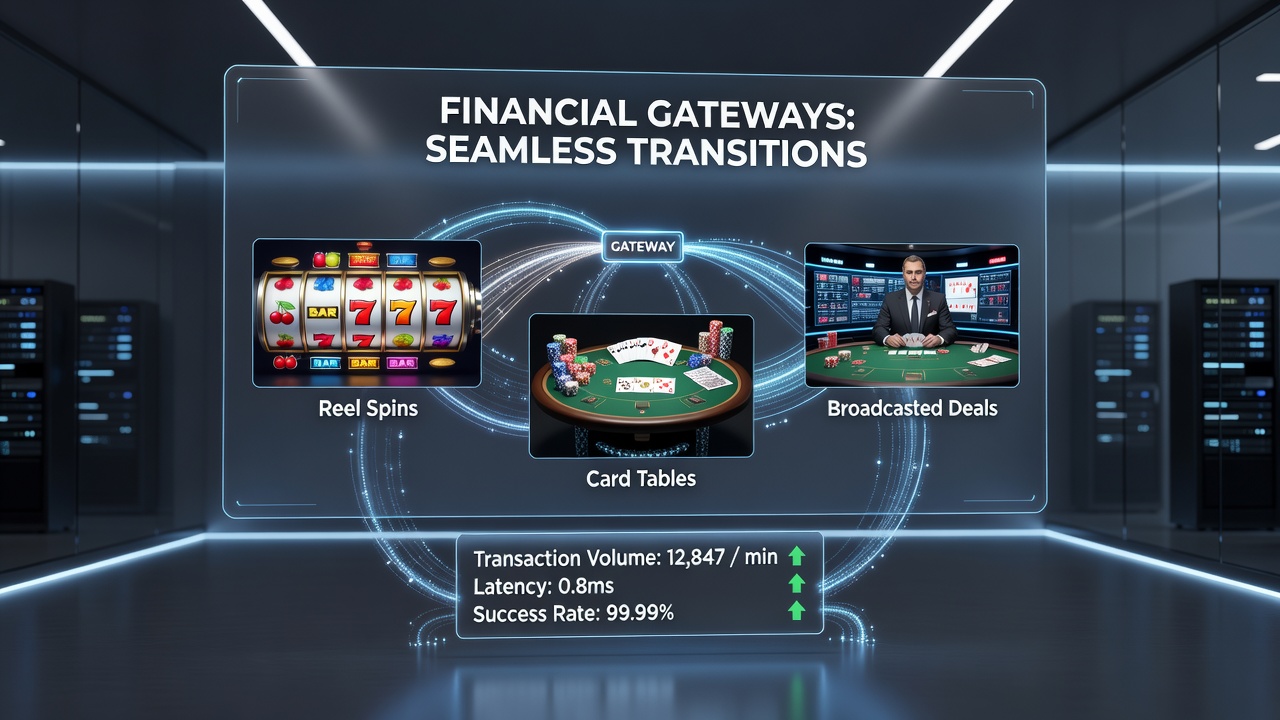
Financial gateways now support uninterrupted movement between reel-based games, traditional card tables, and streamed dealer sessions on portable devices, and operators have built these systems around instant verification protocols that process deposits and withdrawals in seconds rather than minutes. Data from industry monitoring groups shows transaction success rates exceeding 98 percent across leading mobile platforms as of June 2026, while security layers incorporate tokenization and real-time fraud detection to maintain compliance with regional standards.
Core Mechanics of Unified Transaction Flows
Modern gateways operate through a single wallet architecture that registers balances across multiple game categories without requiring separate funding steps, and this design allows users to exit a slot session featuring expanding wilds and enter a blackjack table or live roulette stream using the same account balance. Application programming interfaces connect banking partners directly to game servers so authorization occurs at the point of selection rather than through repeated logins or menu navigation, and researchers at the University of Nevada's gaming technology lab documented average transfer latency dropping below 1.2 seconds in controlled tests conducted during early 2026.
Regional Regulatory Alignment and Technical Standards
European operators align gateway protocols with directives from the Malta Gaming Authority and the Swedish Gambling Authority, whereas North American platforms follow frameworks established by the Alcohol and Gaming Commission of Ontario and the Nevada Gaming Control Board; these bodies require encryption standards that exceed 256-bit AES and mandate independent audits every quarter. Payment providers integrate with local banking rails such as SEPA Instant in the EU and Interac in Canada, which eliminates currency conversion delays and supports same-day settlement for withdrawals above certain thresholds.
One documented case involved a mid-sized operator that migrated its entire user base to a unified gateway in March 2026, resulting in a 34 percent reduction in abandoned sessions according to internal metrics shared with the European Gaming and Betting Association. Observers note that similar upgrades elsewhere have produced comparable stability gains during peak evening hours when simultaneous access to slots and live tables increases.
Security Layers and User Verification Pathways
Biometric confirmation combined with device fingerprinting forms the primary gate for high-value transfers, while lower-risk transactions rely on stored payment tokens that never expose full card details to the gaming server. Multi-factor authentication triggers automatically when activity patterns deviate from established norms, such as rapid switches between high-volatility slots and live dealer tables exceeding a preset frequency. Studies published by the International Centre for Gaming Regulation indicate that these layered controls have reduced chargeback rates by 41 percent year-over-year across sampled markets.
Performance Metrics and Adoption Trends
Transaction volume figures released by payment processors reveal that mobile users completed an average of 7.4 cross-format switches per active session during the first half of 2026, with live dealer events accounting for the largest share of subsequent deposits. Gateway uptime metrics consistently exceed 99.95 percent, supported by redundant server clusters distributed across multiple data centers. Those monitoring adoption patterns report that operators offering instant deposit bonuses tied to seamless transitions record higher retention compared with platforms maintaining separate wallets for each category.
Future Integration Points
Developers continue to test integration with emerging digital currency rails and open banking frameworks that allow direct account-to-account transfers without intermediate processors, and pilot programs in select jurisdictions have already demonstrated sub-second confirmation times. These advancements build upon existing infrastructure rather than replacing it, ensuring backward compatibility for users who prefer traditional card or e-wallet methods while expanding options for those seeking alternative rails.
Conclusion
Payment gateways have evolved into the connective tissue that lets mobile users move freely between reel spins, card tables, and broadcast dealer events without friction or repeated authentication, and continued alignment with regulatory bodies alongside measurable performance gains points to further consolidation of these systems across global markets through the remainder of 2026 and beyond.